What is a bitumen waterproofing system?
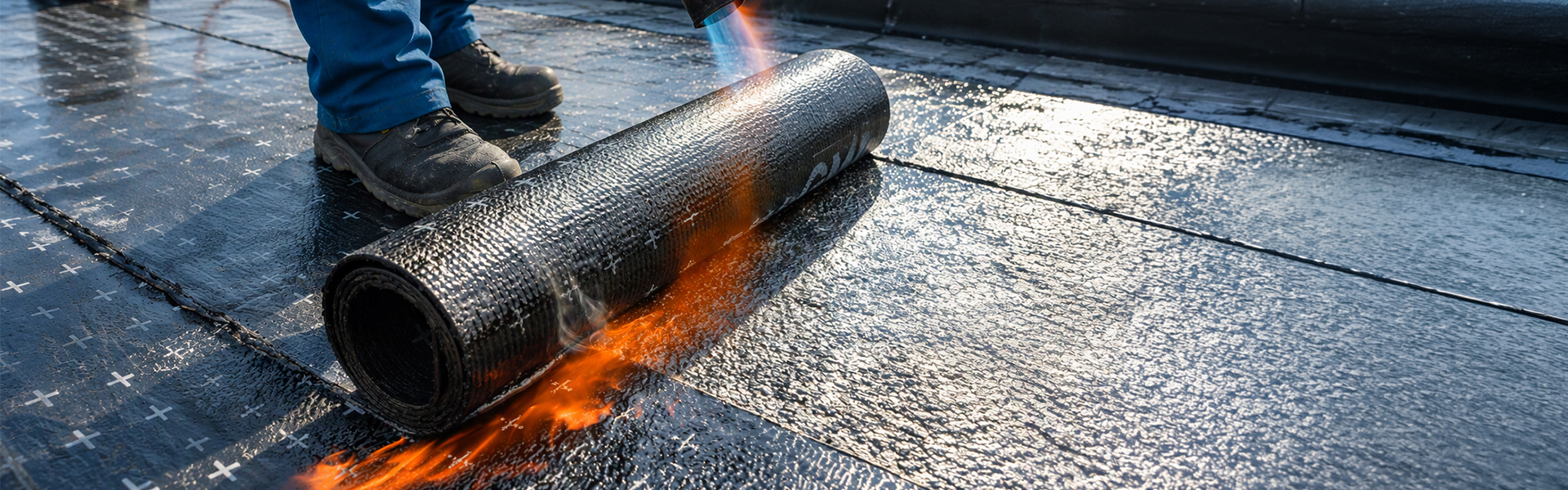
Bitumen is a waterproof material that is typically used in sheets for roof waterproofing. When installed over the entire surface and joined at the seams, bitumen sheets form a continuous waterproofing layer. This protects the insulation and roof structure from moisture.
Modern roofing membranes are often made of polymer-modified bitumen. The addition of plastics enhances the material’s properties: the membranes remain more flexible at low temperatures, withstand heat better, and can accommodate movement within the roof structure.
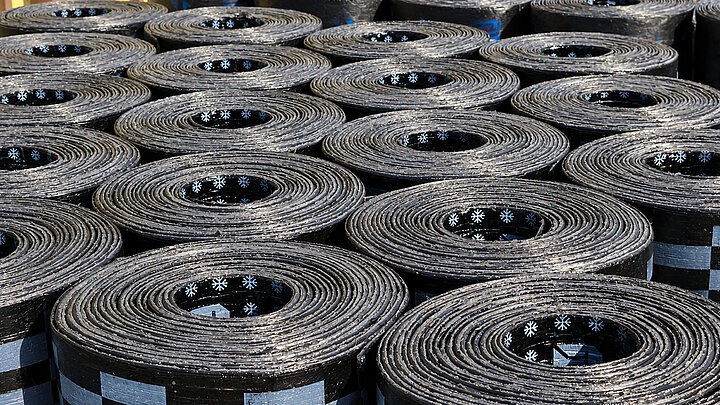
On flat roofs, the design of bitumen waterproofing involves multiple layers:
- Underlayment: forms the first waterproofing layer and is selected to match the substrate and roof structure.
- Top membrane: completes the seal and protects it from weather and mechanical stress.
Since the seams of the two layers are staggered, this provides additional security. The choice of suitable bitumen membranes depends on the substrate, roof structure, intended use, and installation method.
Bitumen membranes or liquid bitumen: what's the difference?
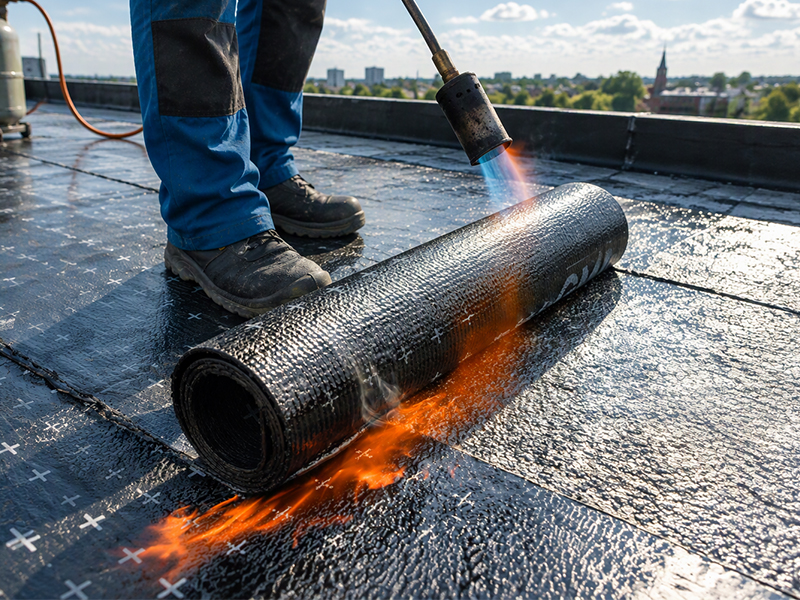
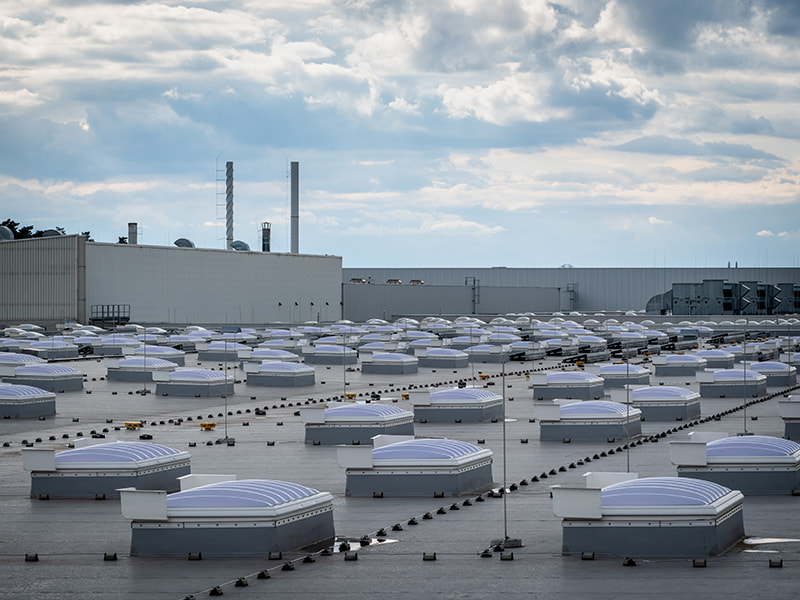
If you want to seal a flat roof with bitumen, you’ll usually use bitumen membranes. Depending on the product, these are welded, glued, mechanically fastened, or loose-laid under ballast. Roof lights can also be securely integrated using this method, provided the upstand offers suitable connection surfaces and is designed for the chosen installation method.
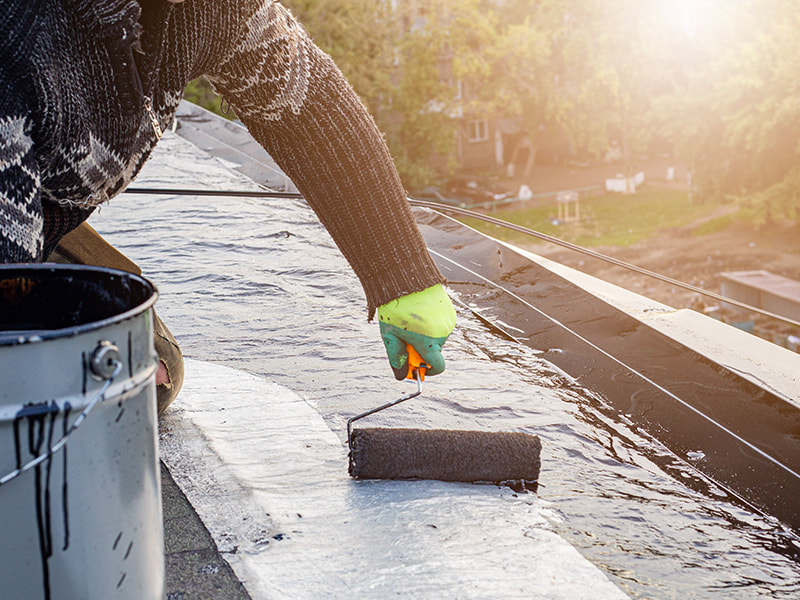
Liquid bitumen, on the other hand, is applied by brushing, rolling, or troweling. It is primarily used as a primer, coating, or supplementary material for specific details, but is not necessarily the better choice for skylight connections. Not every product is suitable for complete roof waterproofing.
This should be distinguished from liquid polymer. When used in combination with a nonwoven fabric insert, it can be particularly useful for complex, angled connections and hard-to-reach transitions. A prerequisite is that the substrate, primer, and waterproofing system are compatible with one another.
Advantages of bitumen in flat roof waterproofing
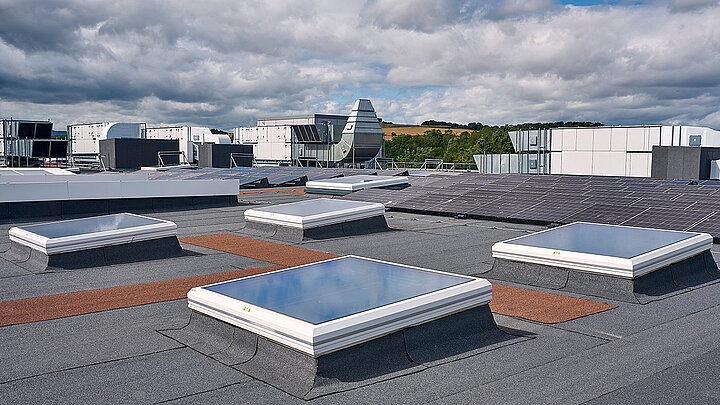
Bitumen roofing membranes have been a staple of the roofing trade for decades. The material is durable, versatile, and available for various roof structures.
The key advantages of bitumen waterproofing on a flat roof:
- Robust construction: Multi-layer systems provide additional security.
- Tight Seams: Professionally welded or bonded membranes form a continuous waterproofing layer.
- Versatile installation: Depending on the system, the membranes can be glued, welded, fastened, or laid loosely.
- Suitable for new construction and renovation: Existing bitumen waterproofing can be partially reworked after a thorough inspection.
- Reliable detail design: Parapets, roof drains, penetrations, and upstands can also be integrated.
However, a good waterproofing product cannot compensate for errors in the roof structure. Slope, drainage, insulation, and connection details must also be correct.
What do you need to seal a roof with bitumen?
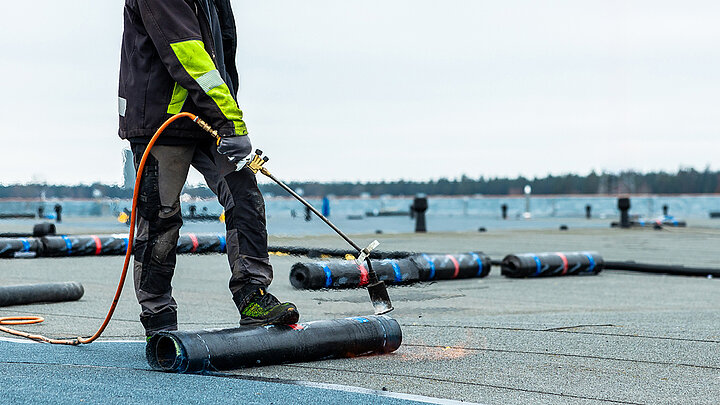
The materials required depend on the roof structure and installation method. Typically, these include:
- bitumen underlayment and top layer
- Primer or bonding agent
- Connection and reinforcement strips
- Fittings for drains and penetrations
- Appropriate adhesives or fasteners
- Gas torch, pressure roller, and roofing knife
- Cleaning tools and seam checkers
- Personal protective equipment and fire extinguishers
A gas torch is not required for self-adhesive or cold-applied membranes. This can be particularly useful on flammeble or heat-sensitive substrates. The manufacturer’s instructions for the specific system remain the authoritative guide.
How to successfully seal with bitumen: step by step
1. Prepare the Substrate.
The substrate must be clean, dry, level, and have adequate bearing capacity. Loose material, sharp edges, and uneven surfaces must be removed.
During a renovation, it is also necessary to check whether the existing seal and insulation are still functional. Damp or loose layers must not simply be covered over.
2. Construct the roof structure
Depending on the design, a primer coat, vapor barrier, thermal insulation, and other functional layers are installed. At this stage, slope, drainage, parapets, and penetrations must already be taken into account.
3. Laying the bitumen underlayment
The underlayment is aligned and secured according to the manufacturer’s specifications. It is important to ensure tension-free installation, sufficient width of overlaps, and completely sealed seams. Transverse seams should be staggered; cross seams should be avoided.
4. Install the top membrane
The top membrane is laid in a staggered pattern relative to the underlayment membrane so that the seams do not lie directly on top of one another. When using the welding method, sufficient heat must be applied to ensure a secure bond without damaging the membrane or adjacent components.
5. Sealing Connections and Penetrations
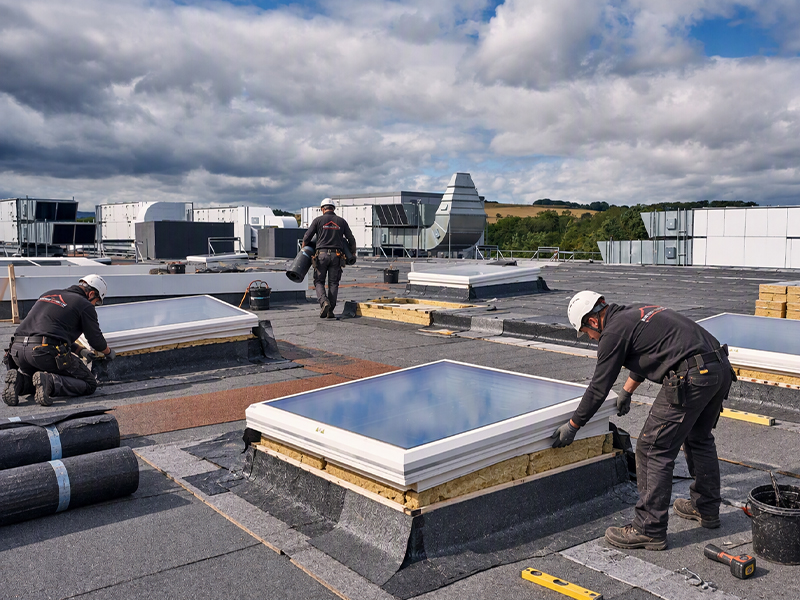
Parapets, roof drains, vent pipes, roof lights, and other penetrations interrupt the continuous seal. Here, it is essential to ensure sufficiently large connection surfaces, suitable materials, and carefully formed transitions.
6. Inspect the seal
Finally, seams, joints, and connections are inspected. Roof drains and emergency drainage systems must also be clear. The inspection should take place before protective layers, gravel, or vegetation cover the seal.
Seal roof lights and upstands with bitumen
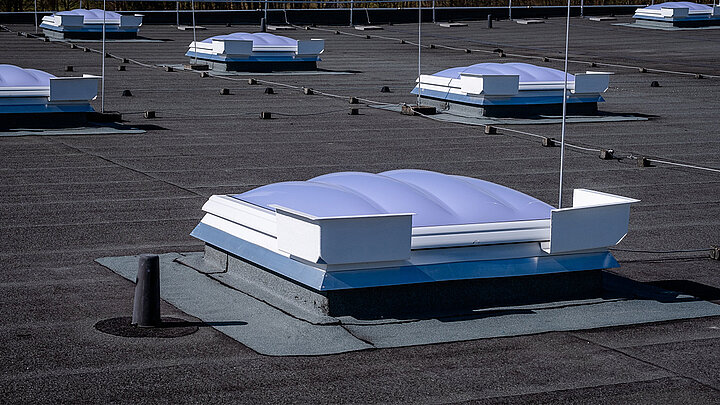
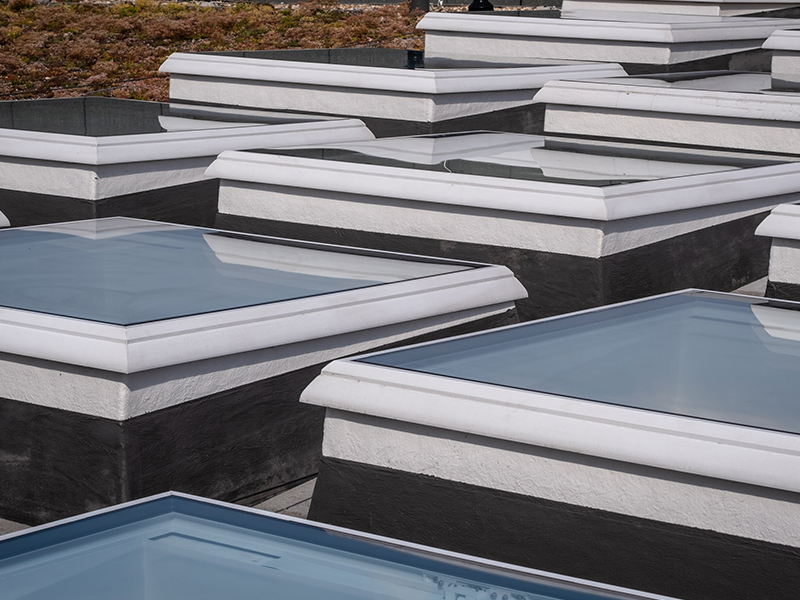
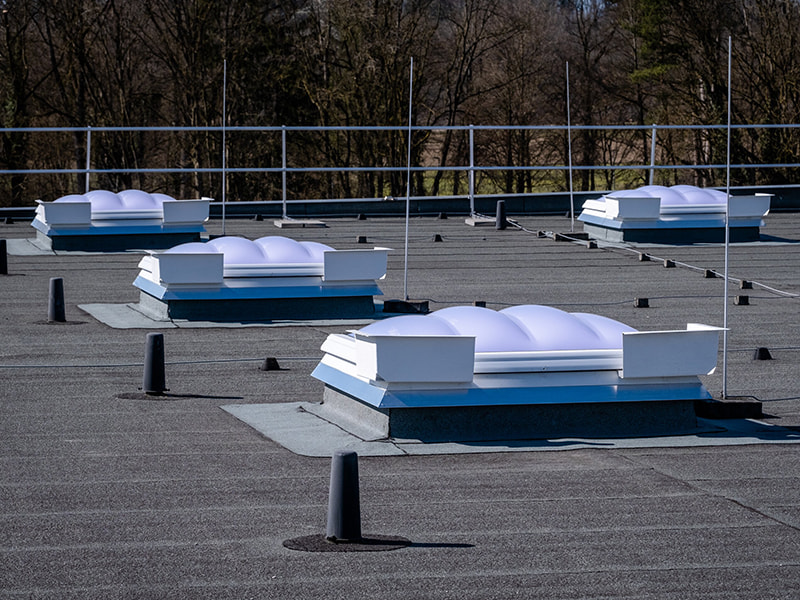
The connection of a roof light is a critical point in flat roof waterproofing. The bitumen membranes must be securely laid up against the upstand and permanently sealed.
The following are particularly important:
- sufficient height above the water-bearing level
- sufficient width and suitable connection surfaces
- neatly finished corners and transitions
- compatibility between the upstand and the seal
- uninterrupted thermal insulation
- secure fastening of the connection membranes
What should you consider when choosing a product?
When it comes to a roof light, it’s not just the top section that matters. The key factor is whether the upstand can be securely integrated into the bitumen membrane without the need for complex custom solutions. To ensure this, roofers should check the following points in particular:
- Compatibility with bitumen membranes: Welding generates high temperatures. Therefore, care must be taken to ensure that the material of the upstand can withstand this heat. Thermoplastic plastics such as PVC are often unsuitable for this purpose.
- Secure fastening: The raised seal must be permanently mechanically secured at the upper edge. An integrated clamping rail prevents the seal from detaching or sagging.
- Appropriate upstand height: The upstand must be high enough to ensure that the required connection height is maintained even after installing insulation, a slope, and surface protection.
- Thermally Insulated Connection: The roof insulation should connect to the upstand without gaps. An insulated upstand that extends all the way to the base flange reduces the need for adjustments and prevents weak spots in the thermal insulation.
- Solution for Renovation Projects: If the existing upstand is still intact, a renovation frame can prevent the need for complete removal. If the roof structure becomes higher due to additional insulation, a heightening element restores the necessary connection height.
LAMILUX offers fully pre-assembled skylights individually tailored to different roof structures and types of waterproofing. Depending on the design, thermally insulated base flanges, connection rails, and clamping profiles facilitate professional installation. The GRP upstand is extremely robust, withstands high temperatures and heavy loads, and provides the necessary thermal insulation.
Bitumen waterproofing on flat roofs: avoid these mistakes
Damage often occurs not on the surface itself, but at seams and joints. Typical problems include:
- damp or dirty substrates
- incompletely sealed seams
- cross-seams and unfavorable sheet arrangements
- excessive or insufficient heat exposure
- failure to plan for connections and penetrations
- Inappropriate material combinations
- Trapped moisture in the existing roof structure
Therefore, roof drains, parapets, and roof lights in particular should be planned in detail before waterproofing the roof surface begins.
Sealing flat roofs without bitumen: alternatives and applications
Bitumen is not the right solution for every construction project. Depending on the substrate, intended use, and specific geometry, other types of waterproofing may be appropriate.
Plastic and elastomer
membranes: Membranes made of PVC-P, FPO, TPO, or ethylene-propylene-diene rubber have a low grammage and can be installed quickly. Depending on the system, they are welded, glued, mechanically fastened, or installed under load. Material compatibility, the substrate, and the fastening method must be carefully evaluated.
Liquid-applied
membrane Liquid-applied membrane is particularly suitable for complex connections, small areas, and geometrically challenging details. It conforms to the shape of the structural element and enables a seamless seal. Prerequisites include a carefully prepared substrate, the appropriate primer, and the specified coating thickness.
Which system is suitable must therefore always be determined based on the entire roof structure.
Liquid-applied waterproofing for flat roofs: a step-by-step guide
Liquid waterproofing for flat roofs is flexible and provides long-lasting protection. Learn step by step how to seal your flat roof, which materials are required and what really matters during application.
How much does it cost to seal a flat roof with bitumen?
As a rough estimate, a two-layer bitumen flat roof waterproofing system costs approximately 40 to 75 euros per square meter, including installation. However, the actual cost depends heavily on the existing roof structure and the number of details involved.
When preparing a quote, roofers should consider not only the area to be covered but, above all, the following items:
- Demolition, waste disposal, and substrate preparation
- Insulation and slope formation
- Parapets, drains, penetrations, and roof lights
- Site setup, fall protection, and material transport
Especially with small or highly segmented flat roofs, the effort required for connections can significantly exceed the work involved in covering the roof area itself. During renovations, it is therefore worth inspecting existing components. If, for example, the upstand around a roof light is still intact, a suitable renovation frame can eliminate the need for costly removal and reinstallation into the roof structure.
Frequently asked questions about roof waterproofing with bitumen
How long does a bitumen waterproofing system last on a flat roof?
The service life depends on the material, installation, roof structure, stress, and maintenance. Regular inspections help detect damage to seams and connections early on.
How many layers of bitumen membrane does a flat roof need?
Bitumen waterproofing is often designed in two layers. However, the required system depends on the intended use, the substrate, the waterproofing system, and applicable regulations.
Can a flat roof be sealed with liquid bitumen?
That depends on the specific product. Liquid bitumen can serve as a primer, coating, or detail material. Not every product is suitable for complete flat roof waterproofing.
Can a new bitumen membrane be installed over old bitumen membranes?
This is possible under certain conditions. The bearing capacity, adhesion, and moisture content of the existing roof structure must be checked beforehand.
Can a flat roof be sealed without bitumen?
Yes. Possible alternatives include plastic and elastomeric membranes as well as liquid plastic membranes. The choice depends on the substrate, roof structure, intended use, and detail design.
How are roof lights integrated into a bitumen waterproofing system?
The bitumen membranes are professionally extended to the upstand and permanently attached. Key factors include suitable connection surfaces, sufficient connection heights, and cleanly finished corners.