Mistake 1: what doesn't fit wastes time
In practice, many problems that arise later begin long before the actual assembly. Especially with rooflights, glass skylights, or more complex daylighting systems, even a deviation of just a few millimeters in the measurements can quickly lead to the need to adjust connections or reorder components.
Especially in renovation projects, existing roof openings are often not fully documented. What’s shown on the plans doesn’t always match the reality on the construction site.
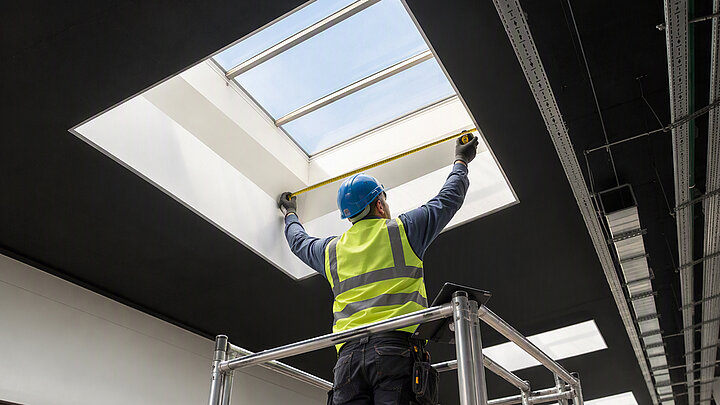
Practical Tip: The more complex the situation, the more important it is to involve the manufacturer early on. Manufacturers such as LAMILUX are happy to assist, upon request, with assessing the existing conditions, taking measurements, or providing technical specifications. This helps avoid surprises down the road and ensures that installation teams have reliable measurements and details from the very beginning.
Mistake 2: during renovations, more is replaced than necessary
Many roof renovations are still planned according to the “out with the old, in with the new” principle. Yet existing upstands or substructures are often still in good technical condition.
Removing these components prematurely creates additional work, prolongs the time the roof is open, increases project costs, and creates more opportunities for errors.
Especially when modernizing roof lights, it’s worth taking a close look at the existing structure. Often, it’s sufficient to replace individual components or make sensible use of existing structures.
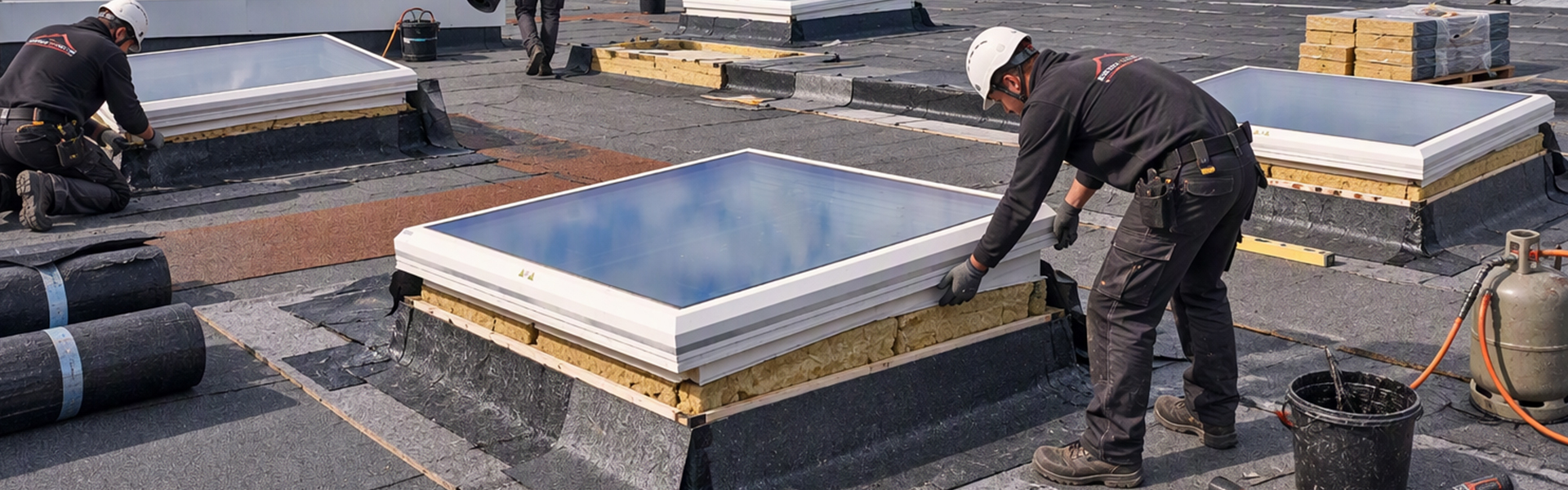
Practical Tip: Special renovation solutions, such as the LAMILUX renovation frames, make it possible to integrate existing upstands and carry out assembly much more efficiently. This saves time on the roof and minimizes interference with the existing roof structure.
Installing the LAMILUX heightening element is this easy:

Mistake 3: installation costs are underestimated during planning
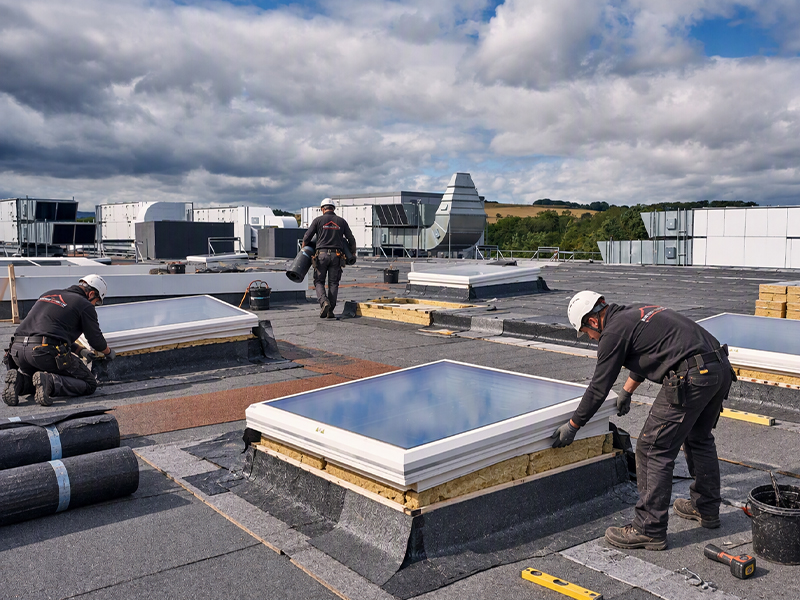
On paper, assembly often looks simple—after all, sometimes it’s just a few screws. In reality, however, components must be sorted, pre-assembled, adjusted, and put together on the roof.
Especially with larger projects, these additional assembly steps can quickly add up to several hours of work. At the same time, the risk of assembly errors and careless mistakes increases with every single step.
A missing component, an incorrectly positioned gasket, or a screw connection that wasn’t tightened properly often isn’t noticed until later.

That is why ease of installation is becoming increasingly important. Roofers benefit from solutions that are delivered factory-prepared or pre-assembled.
Practical Tip: When installing roof lights and glass skylights, it’s worth taking a close look at the actual scope of installation. Fully pre-assembled skylights, such as those from LAMILUX, reduce the amount of work required on-site and ensure consistent results, regardless of which installation team is assigned.
Mistake 4: responsibility isn't clarified until it reaches the roof
Modern roof lights are often more than just sources of natural light. Electrically operated openers, smoke and heat exhaust functions, sunshades, and ventilation elements bring additional trades into play.
If it is not until assembly that it becomes apparent that electrical connections are missing or that wiring routes were planned incorrectly, unnecessary delays result. Early coordination is crucial, especially for larger industrial and commercial buildings.
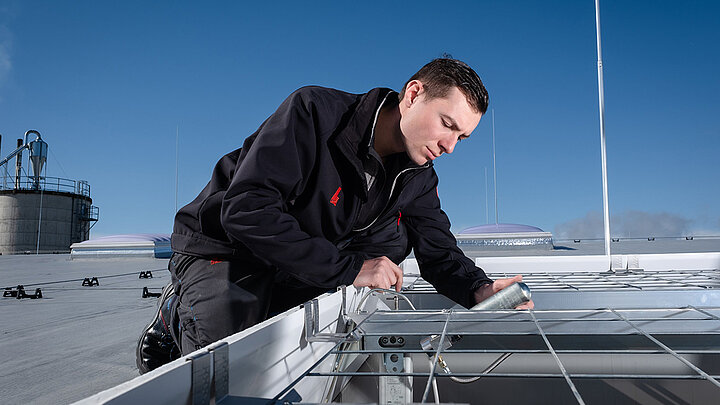
Practical Tip: Responsibilities for electrical engineering, smoke and heat exhaust systems, or building automation should be clearly defined before installation begins. The more complex the task becomes, the more advisable it is to delegate responsibility. Manufacturers such as LAMILUX have their own installation teams for such cases, who professionally install and test SHEV systems.
Mistake 5: unnecessary improvisation instead of choosing the best product
When it comes to insulating and sealing a roof light, quality craftsmanship is key. It’s all the better when the product makes working on the roof as easy as possible. After all, combining different materials or coming up with additional solutions for specific connection details means one thing above all else: more work.
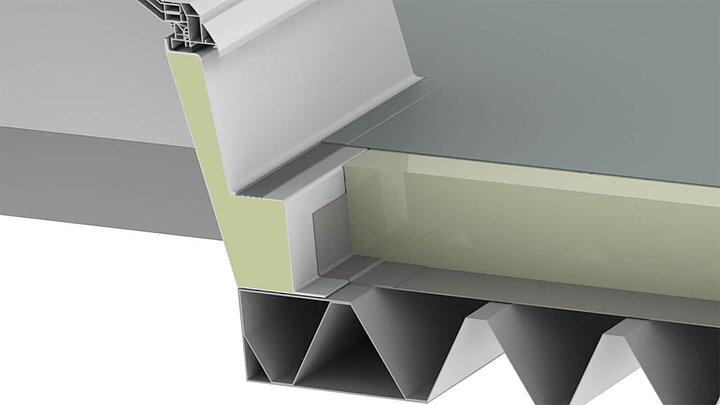
That’s why it’s worth paying attention to how well a roof light can be adapted to the specific roof structure when selecting a product. LAMILUX, for example, offers thermally insulated base flanges, PVC connection rails, or suitable surfaces on the upstand for sealing with liquid plastic. This allows many connection details to be designed to match the specific installation situation without having to improvise unnecessarily on the construction site.
Practical Tip: Don't just look at the roof light itself—also consider what's already been taken into account in the surrounding area. The better the product and the roof structure match, the easier the work on the roof will be.
Mistake 6: price is the deciding factor in product selection
Of course, the purchase price plays an important role. However, when considering the total cost of a project, installation time, susceptibility to errors, and follow-up costs are often more important than the price difference between two products.
A system that appears to be inexpensive may turn out to be a more expensive solution if additional installation hours are required or if rework is needed.
That’s why many roofing companies today no longer consider just the product price, but the total installation cost. A high degree of prefabrication, technical support from the manufacturer, and well-documented installation steps can pay off right from the first project.
Many construction site errors arise long before assembly begins
If you want to avoid mistakes on the roof, you shouldn’t wait until the installation phase to take action. Often, the critical decisions are made as early as the measurement, planning, and product selection stages.
LAMILUX supports roofers beyond just the product—for example, through planning assistance, renovation solutions, or easy-to-install systems with a high degree of prefabrication. The benefit: fewer sources of error, shorter installation times, and higher-quality workmanship on the job site.